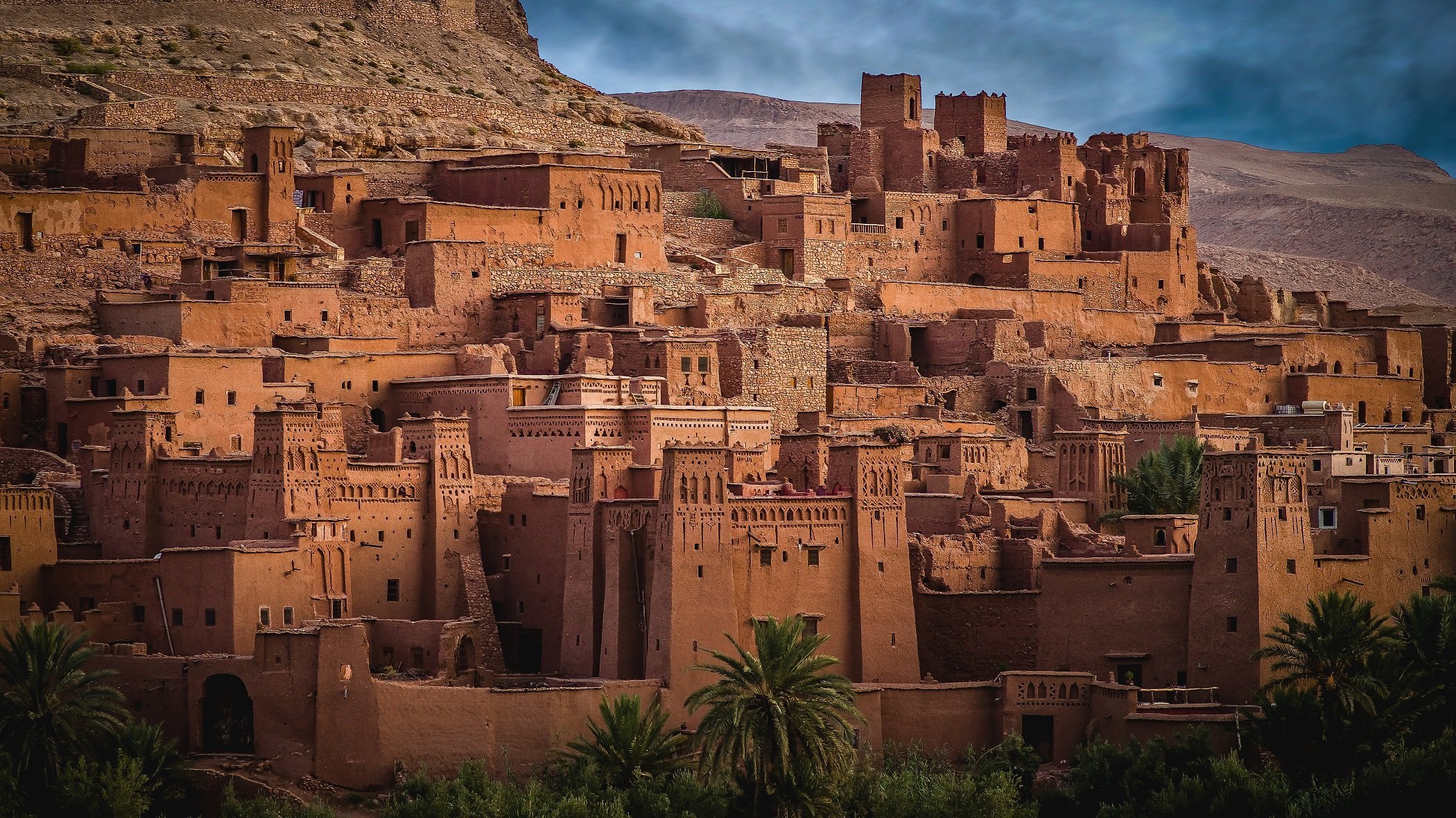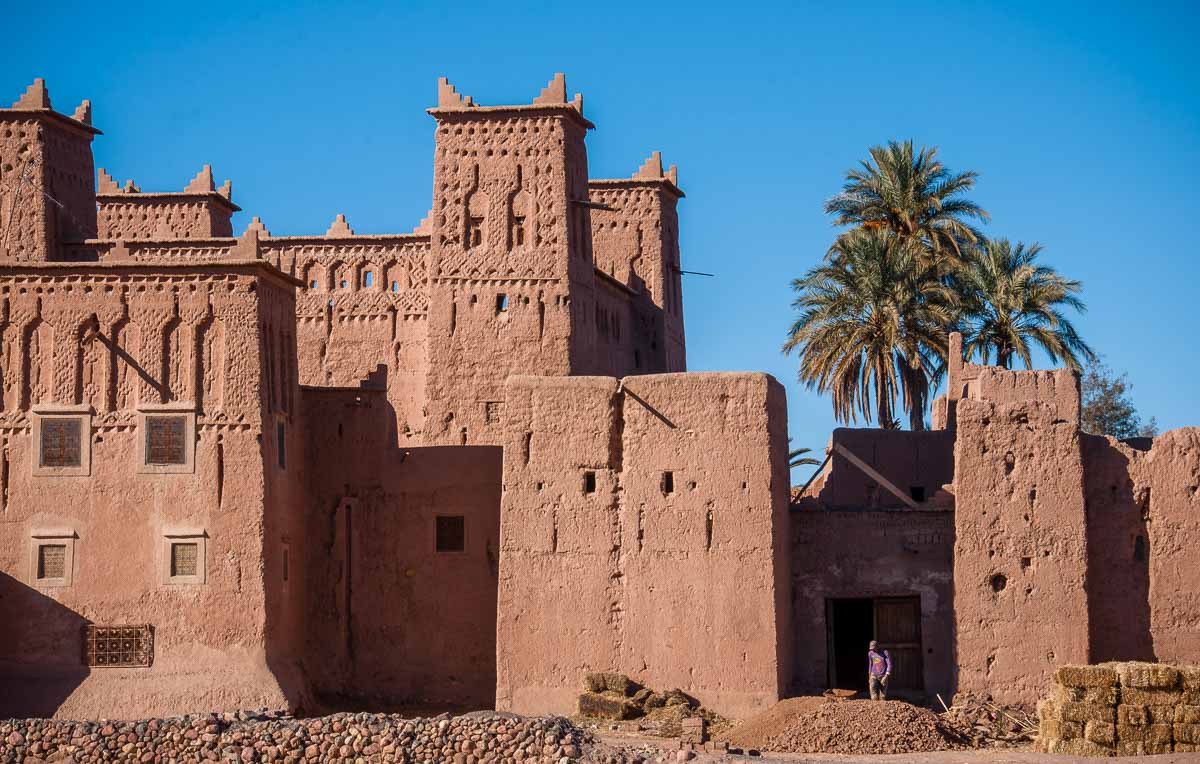
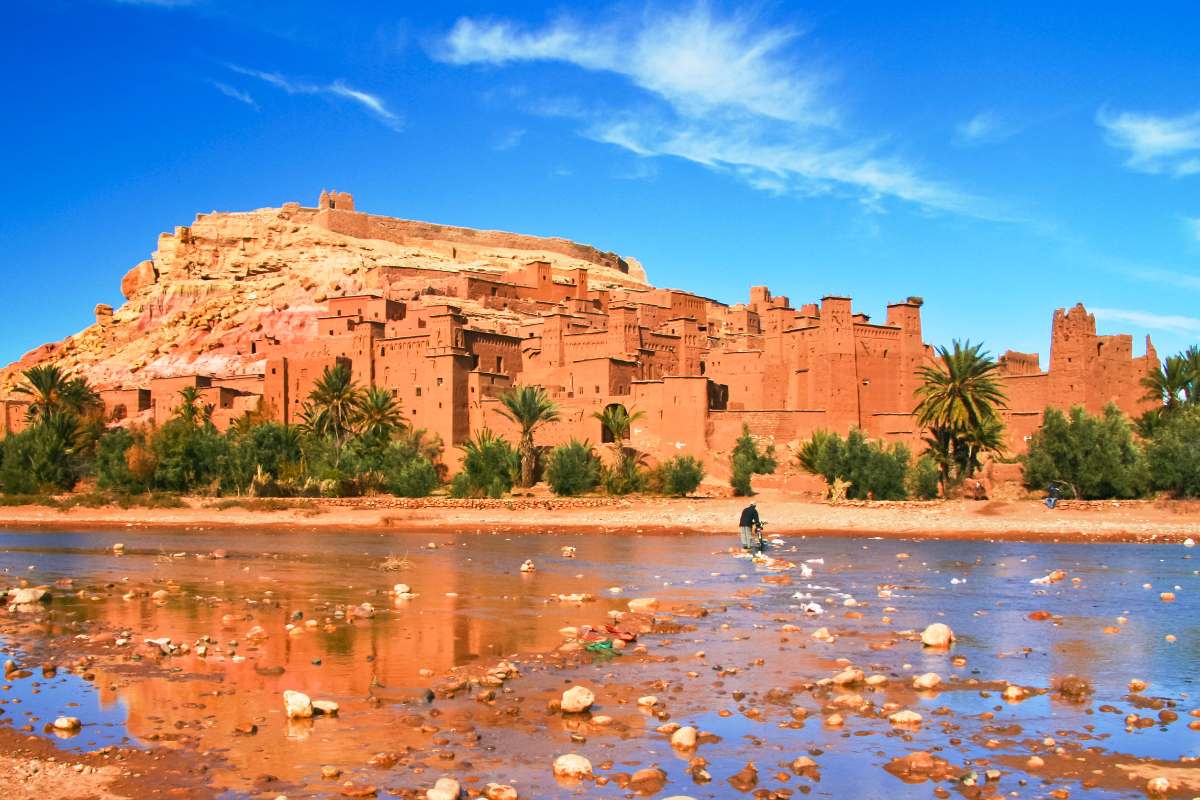
Aït Benhaddou is a historic fortified village, or ksar, located along the former caravan route between the Sahara and Marrakesh. It is an exceptional example of traditional Moroccan earthen clay architecture and has been a UNESCO World Heritage Site since 1987.
The site of the ksar has been fortified since the 11th century during the Almoravid period, though the current buildings are believed to date from the 17th century, maintaining the ancient construction methods. Its strategic importance stemmed from its location in the Ounila Valley, a crucial stop on the trans-Saharan trade route that crossed the Atlas Mountains via the Tizi n'Tichka pass. This route connected Marrakesh with the Dra'a Valley and the Sahara. With the decline of trans-Saharan trade in the 20th century, the ksar lost its strategic importance, and most inhabitants moved to the modern village across the river. Today, its economy is almost entirely sustained by tourism and its fame as a filming location.
The Ksar of Aït Benhaddou is only sparsely inhabited by a few families who maintain the ancient structures and benefit from tourism. Most of the local inhabitants now live in the modern village across the Ounila River. An exact current population count for the ksar itself is small, estimated to be around a dozen families, with a larger population in the adjacent modern town.
Aït Benhaddou is a UNESCO World Heritage Site, and visitors are encouraged to respect the fragile nature of the earthen architecture. It is often visited as a day trip from Marrakesh or Ouarzazate. The best time to visit is during the cooler months (spring and autumn). A pedestrian bridge links the ksar to the modern village, making access easy.
3 Days 4 Nights