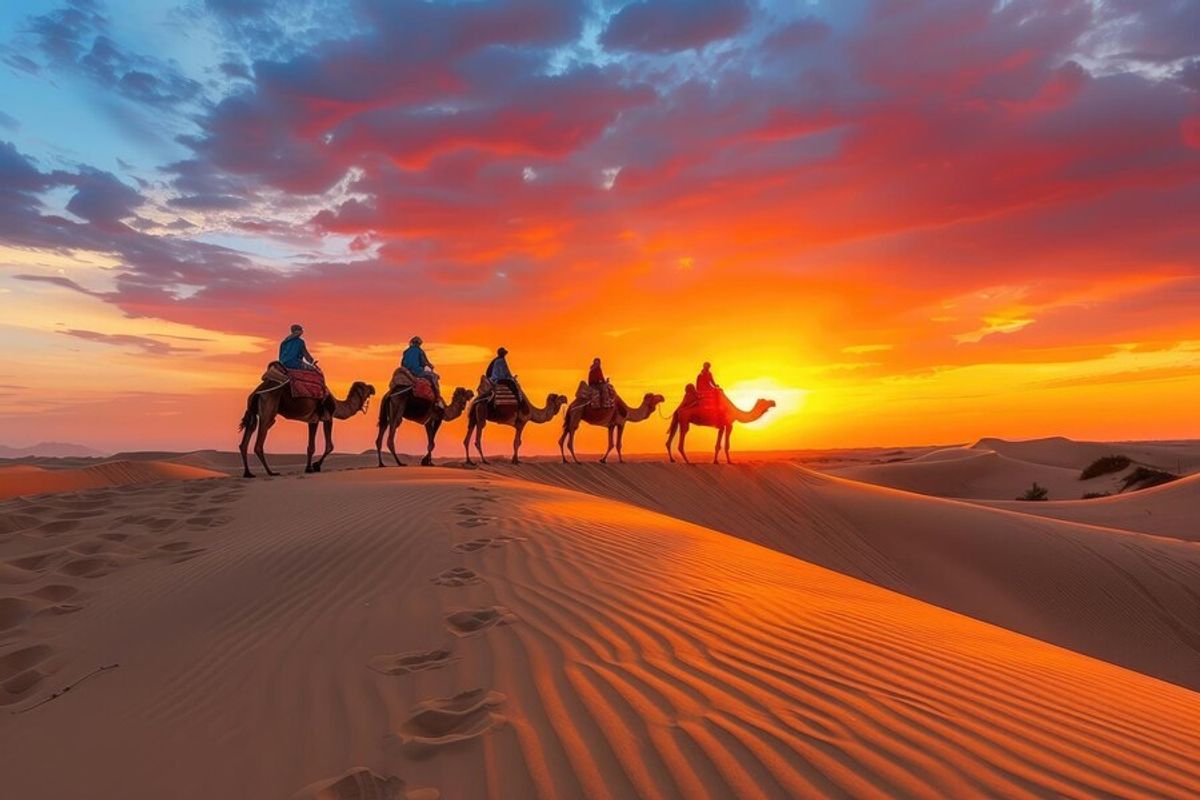
Merzouga, a small village in southeastern Morocco, is the premier gateway to the vast, mesmerizing dunes of Erg Chebbi. It has transformed from a modest transit point into a global destination for desert adventurers, offering an unparalleled experience of the Sahara's golden silence.
Merzouga's history is deeply tied to the ancient caravan routes. Originally an uninhabited oasis, it became a crucial transit point for merchants traveling to Timbuktu. It also served as a pilgrimage destination for the nomadic Ait Atta tribes. During the French colonial era, the strategic importance of the region led to the construction of fortifications by the French Foreign Legion between 1916 and 1932. Today, its history is reflected in its traditional architecture and the enduring nomadic culture of the region.
Merzouga is a small, remote settlement. While no recent official census data is widely available for the village itself, it is a small community with a population of a few hundred permanent residents. The local population is primarily of Berber origin, with a mix of settled and nomadic communities, whose economy is now heavily reliant on the tourism industry.
Merzouga is famous for its proximity to the natural wonder of the Sahara. Key attractions and sites include:
Merzouga is remote, and visitors should be prepared for the desert environment. The heat can be intense in the summer months (June to August), making spring and autumn the most popular times to visit. The nearest major city is Rissani. Transportation is primarily via 4x4 vehicles. While tourism is well-established, it is important to respect the local Berber culture and the fragile desert ecosystem. It is advisable to book tours through reputable local operators.