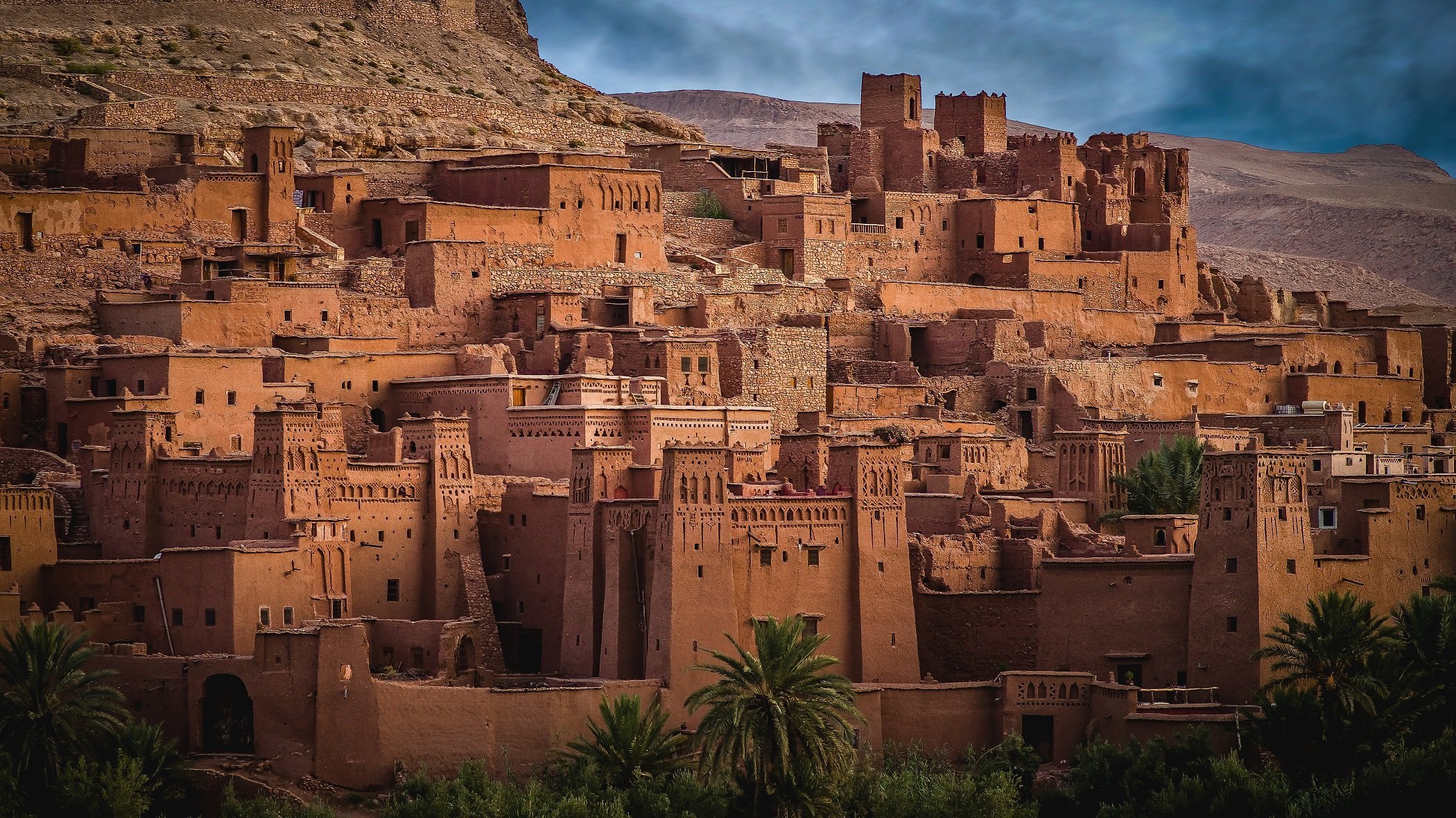
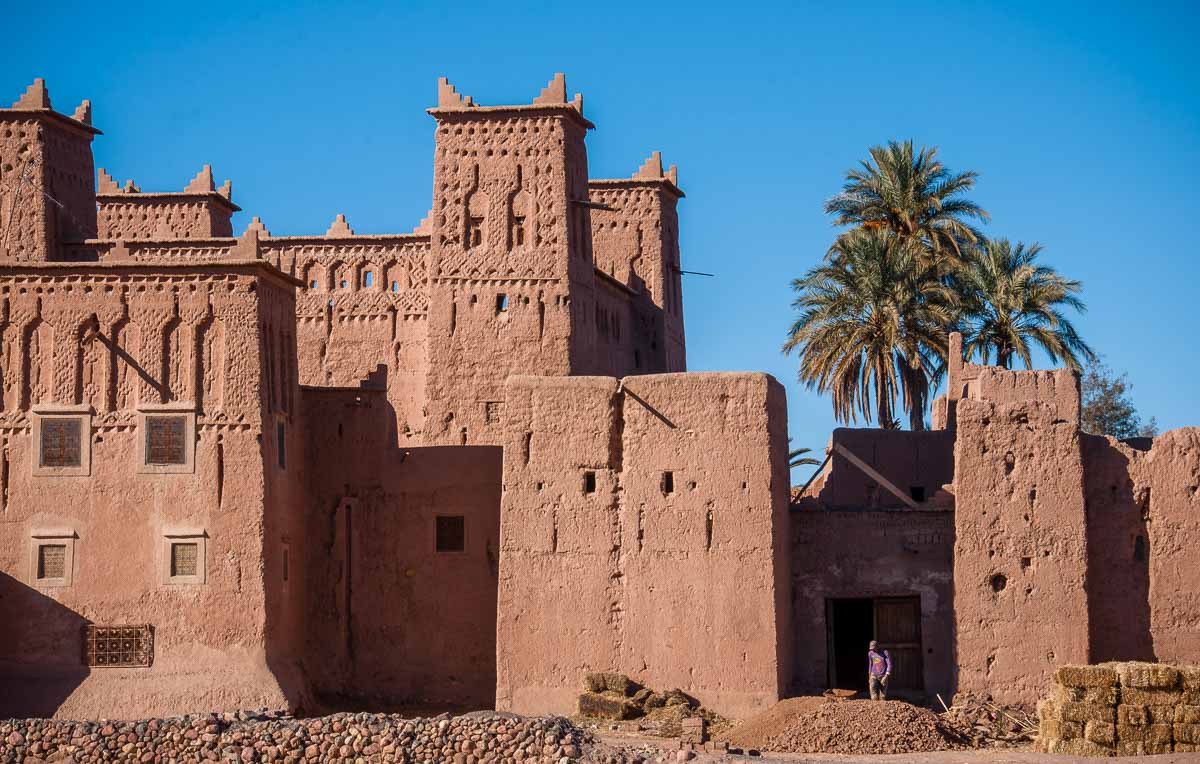
Skoura is a historic oasis and palmeraie situated in the Drâa-Tafilalet region, often referred to as the "Oasis of a Thousand Kasbahs." It is a vital stop on the famous "Road of a Thousand Kasbahs," lying between Ouarzazate and the Dadès Valley.
The history of Skoura is rooted in its strategic location as a fertile oasis fed by the rivers descending from the High Atlas mountains. This made it a crucial stopping point for caravans traveling between the Sahara and Marrakesh. The oasis was settled by the Masmouda, a prominent Amazigh (Berber) confederation. Over the centuries, the wealth generated from agriculture and trade led to the construction of countless fortified family mansions, known as kasbahs, and fortified villages, or ksour, built from traditional rammed earth. These structures, dating from various periods, are a testament to the region's rich architectural heritage and its role in trans-Saharan trade.
The main town center of Skoura has a population of approximately 4,332 (based on the latest available data). The population of the wider oasis is composed of diverse Amazigh groups, whose traditional way of life revolves around the palm groves and the cultivation of olives, almonds, and dates.
Skoura is famous for its extensive palm groves and its well-preserved traditional architecture. Key attractions include:
Skoura is a tranquil escape from the bustling cities. The best way to explore the palmeraie is on foot, by bicycle, or with a local guide. The area is known for its dates and olive oil. Visitors should be mindful that many kasbahs are private residences or are in various states of disrepair, and should only visit those open to the public.

Nothing Match your search terms. Please try again with some different keywords.