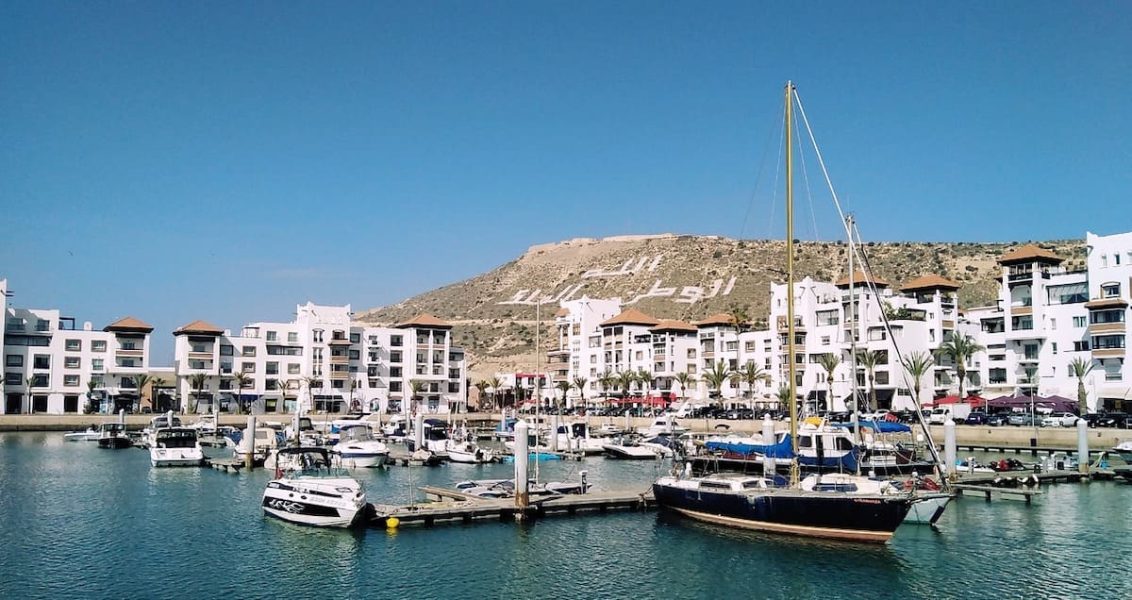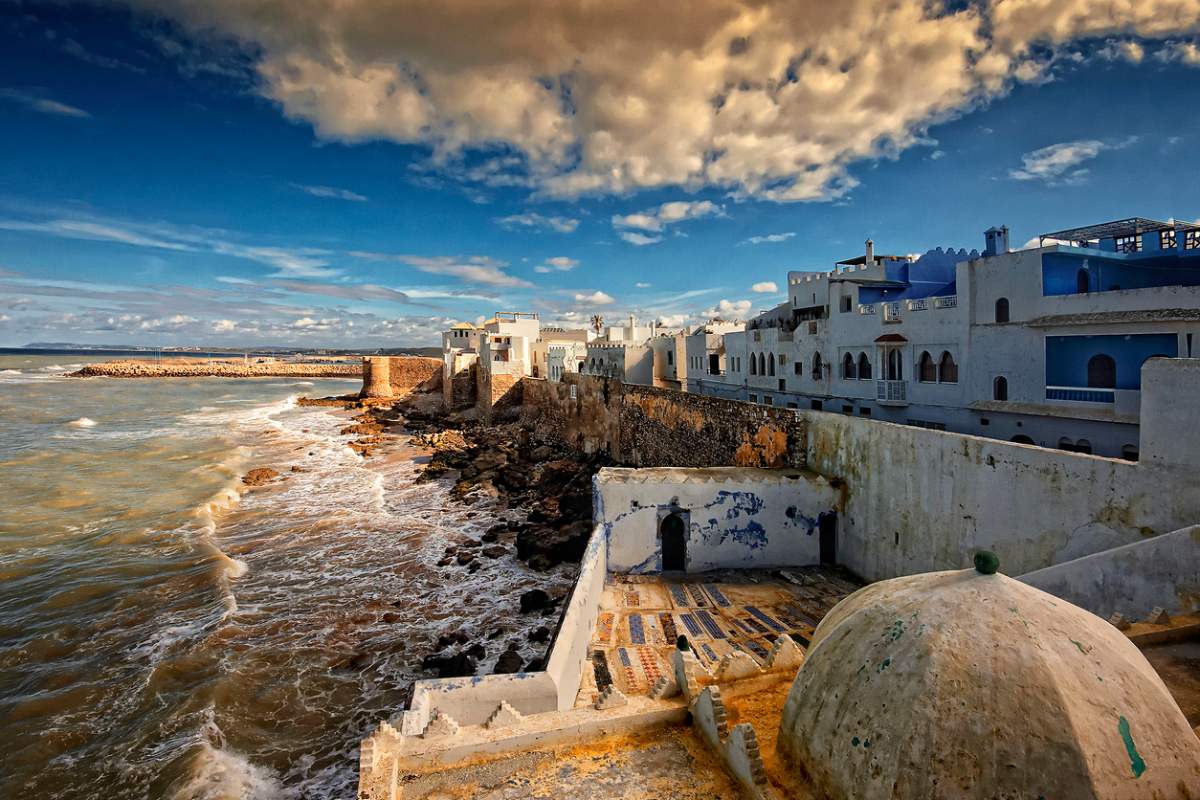
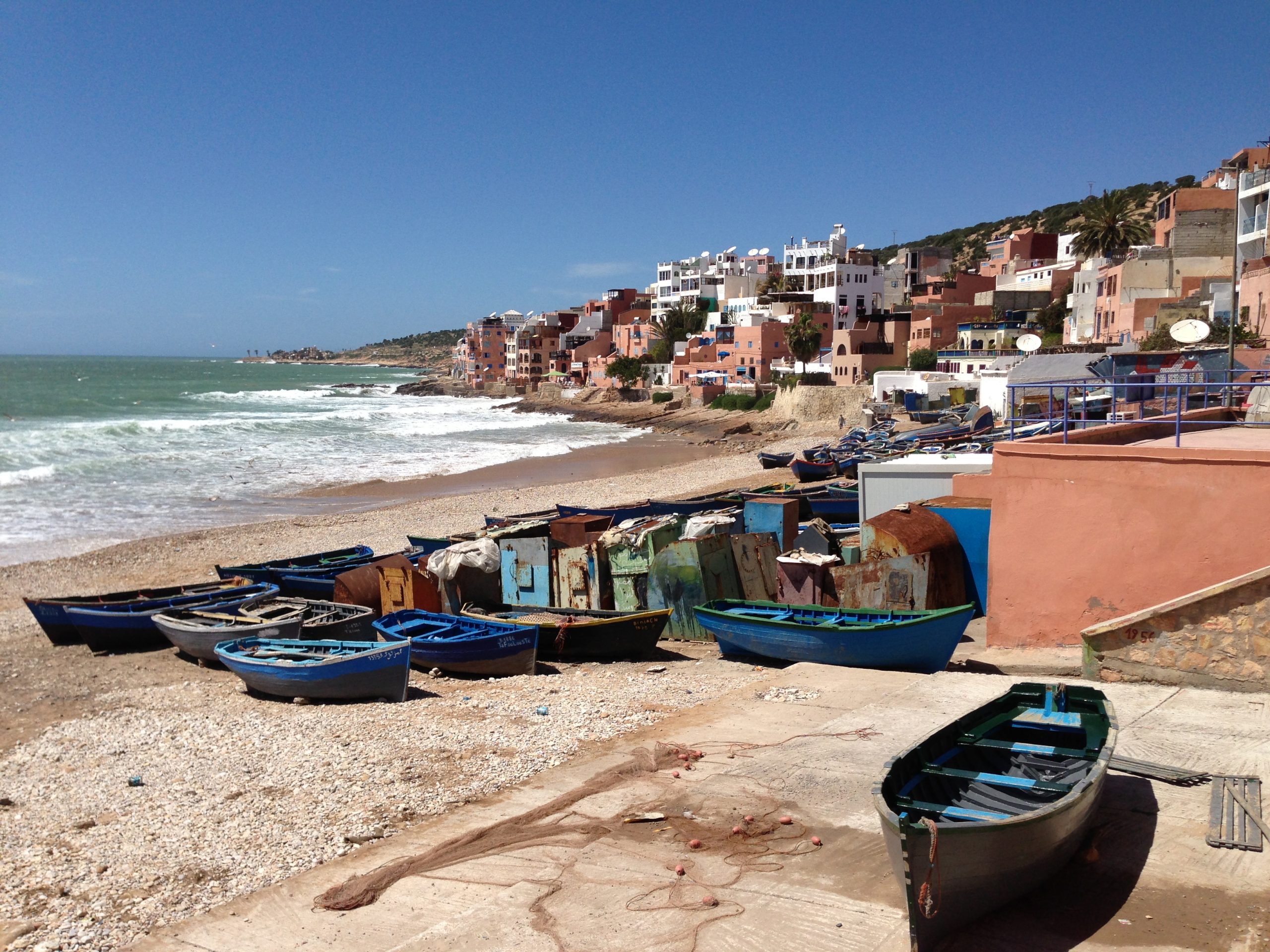
Taghazout is a small, bohemian Berber fishing village situated on Morocco's Atlantic coastline, just north of Agadir. It has evolved into the country's most famous surfing destination, attracting travelers from around the globe with its laid-back atmosphere, consistent waves, and stunning beaches.
Taghazout's history is rooted in its past as a traditional Berber fishing village. For centuries, the local Berber inhabitants used the village primarily as a place to store their fishing equipment. Its modern transformation began in the late 1960s when it became a popular, off-the-beaten-path destination on the "Hippie Trail," attracting a generation of Western travelers. In recent decades, it has solidified its reputation as a world-class surfing haven. The area is currently undergoing significant development as part of the "Taghazout Bay" project, a major eco-resort initiative aimed at sustainable tourism growth.
As of the 2014 census, the population of the independent municipality of Taghazout was approximately 5,233. The inhabitants are predominantly of Berber origin, though the village's growth as a tourist hub has brought in many newcomers from other regions of Morocco and a large expatriate community. The local economy is sustained by fishing, the production of Argan oil, and increasingly, tourism.
Taghazout is a destination defined by its coastline and surf culture. Key attractions include:
The best time for surfing is generally between September and April. While Arabic and French are the main languages, English is widely spoken in the tourist and surf community. The village maintains a relaxed, bohemian vibe, but visitors should be aware of the ongoing construction from the Taghazout Bay project. It is advisable to be respectful of local customs, especially outside the main tourist areas.
3 Days 4 Nights